Feathered Copycats and Jungle Geniuses


Quiz Complete!
Feathered Copycats and Jungle Geniuses: The Secret Lives of Tropical Parrots

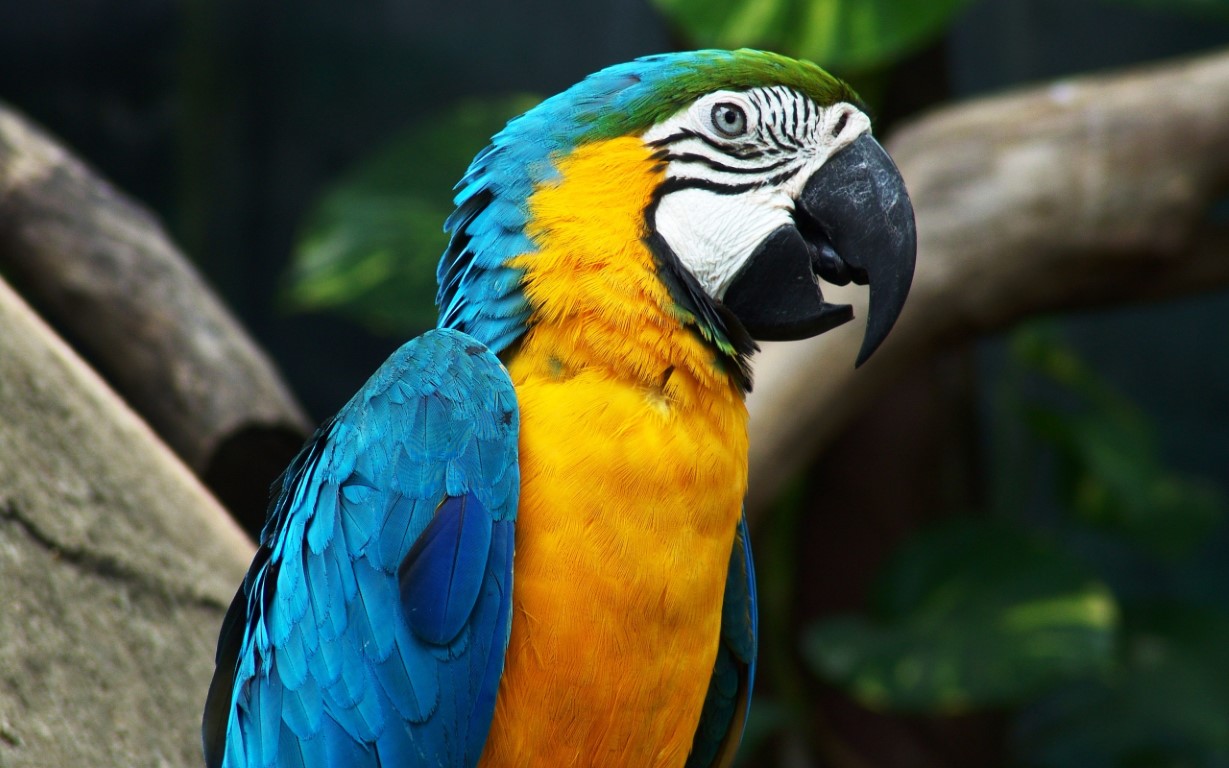
Introduction Tropical parrots are famous for their bright feathers and bold personalities, but their real superpower is their brain. From rainforest canopies to savannas and mangroves, many parrot species solve problems, remember routines, and communicate in ways that can feel surprisingly familiar to humans. Their intelligence, long lives, and social complexity help explain why they are so beloved, and also why they are often misunderstood.
Brains, beaks, and built in tools Parrots are among the most intelligent birds, often compared with crows and some primates in problem solving ability. In captivity, many can learn to open latches, undo knots, or solve puzzle feeders by testing different approaches and remembering what worked. Their beaks are not just for cracking seeds. A parrot can use its beak like a third hand to climb, hold objects steady, and manipulate food. Many species also use their feet with impressive dexterity, gripping items and bringing them to the beak with careful control.
Speech mimicry and what it really means Some parrots can mimic human speech with uncanny clarity, but mimicry is not the same as understanding. In the wild, parrots are vocal learners, meaning they can copy and modify sounds they hear. This helps them fit into a flock, recognize family members, and coordinate movements. In homes, that talent gets redirected toward doorbells, laughter, and words. A few individuals can learn to use words in context through training and repetition, but even then, much of what people hear is a parrot skillfully matching sounds to situations rather than holding a human like conversation.
Social lives, bonds, and flock culture Many parrots are deeply social. Some species form long term pair bonds and may stay with the same mate for years. Their flocks are noisy for a reason. Calls can carry long distances through dense forest, helping birds keep track of one another while feeding or traveling. Researchers have found that certain parrots use distinct contact calls that function like name tags, allowing individuals to identify each other. Social learning is also important. Young birds may pick up feeding techniques, preferred foods, and even local call styles from older flock members.
Diet surprises, including clay and blossoms Parrot diets are more varied than the seed only stereotype. Many eat fruit, nuts, seeds, buds, and flowers, and some specialize on nectar or blossoms. One of the most surprising behaviors is clay eating, seen in several Amazonian parrots at clay licks. The leading ideas are that clay may help neutralize toxins found in some unripe fruits and seeds, or provide minerals such as sodium that can be scarce in inland forests.
Nesting habits and long lifespans Most parrots nest in cavities, often in tree hollows, termite mounds, or cliff crevices, depending on the species. Because good nesting sites are limited, competition can be intense. Parrots also tend to have long lifespans for birds of their size, with some large species living for decades. That slow pace of life means populations can take a long time to recover if numbers drop.
Conservation challenges and why they matter Parrots face serious threats, especially habitat loss from logging and land conversion. Illegal trapping for the pet trade has devastated some wild populations, and even legal trade can create pressure if it is not carefully monitored. Because parrots are social and often gather in predictable places, they can be easy targets. Conservation efforts focus on protecting forests, safeguarding nesting sites, enforcing trade regulations, and supporting community based programs that make living parrots more valuable than captured ones.
Conclusion Tropical parrots are more than colorful decorations of the jungle. They are clever, long lived, highly social animals with complex communication and remarkable physical skills. Understanding how they think, eat, bond, and survive in the wild makes their behavior in captivity easier to interpret and highlights why protecting their habitats is so urgent. The next time a parrot startles you with a perfect imitation or a daring escape, you are witnessing the work of a true jungle genius.